

Buzz words in Therapy; Narrative Therapy, Somatic Therapy, Acceptance and Commitment Therapy...
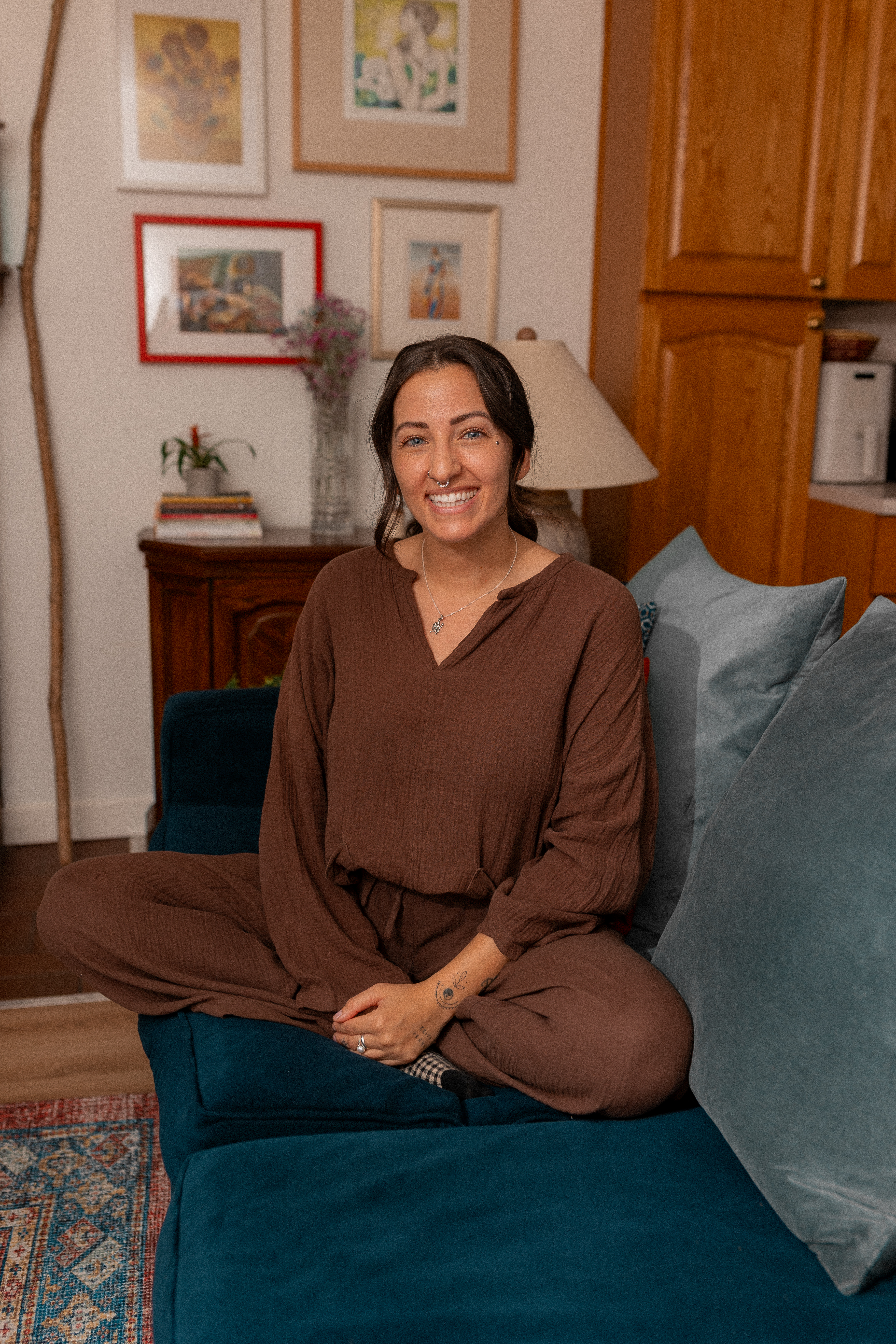
There are a lot of big words in therapy: Narrative. Somatic. Acceptance and Commitment Therapy. Eye Movement Desensitization and Reprocessing. Cognitive Behavioral. Dialectical Behavior Therapy.
Here’s what we actually mean when we use them. And a little about where these ideas come from.
Narrative Therapy
“Let’s talk about the stories you’ve been carrying.”
The stories we tell about ourselves shape how we see ourselves. So we can get curious: Who gave you this story? Is it still serving you? What other stories might be possible?
Indigenous Peoples have used and continue to use storytelling to carry knowledge, identity, history, teachings, relationships and ways of understanding themselves in the world long before Western psychology and therapy modalities repackaged storytelling as a therapeutic practice.
Somatic Therapy
“Let’s listen to what your body is telling us.”
Somatic therapy brings the body into the conversation. A tight chest, clenched jaw, the urge to run.
Long before psychology named it “somatic therapy,” Eastern traditions such as yoga have understood the body as a source of wisdom, understanding and connection. Yoga, pranayma and and dhyana (meditation) are traditions of understanding the relationship between body, mind and experience.
Acceptance and Commitment Therapy
“You don't have to get rid of difficult feelings before you start living.”
What matters to you? Who do you want to be? ACT helps us make room for uncomfortable thoughts while moving toward what matters.
Zen Buddhism and Taoism have always centered their practices on reducing human suffering by changing our relationship with our thoughts, emotions and actions. ACT has extracted ideas from Eastern knowledge systems, then presented as a psychological theory.
Eye Movement Desensitization and Reprocessing (EMDR)
“Let’s help your brain make sense of what happened so it doesn’t keep showing up like it’s present.”
EMDR uses bilateral stimulation, often eye movements, but sometimes tapping or sound, to support the processing of distressing memories.
Humans have long used rhythm, movement, repetition, sound in healing. EMDR was developed when psychologist Francine Shapiro was walking in a park and noticed her distressing thoughts seemed to become less intense when her eyes moved back and forth tracking the light filtering through the trees.
You don't need to know your modality, your attachment style or how regulated your nervous system is. Instead, you can tell me what's going on and we can work through it slowly and with ease. Together, we can make space for all the messy, loving, complicated human parts of you that have been trying their best to get through life.
Cognitive Behavioral Therapy
“Let’s get curious about the thoughts that shape how you feel and what you do.”
CBT looks at the relationship between our thoughts, feelings, and behaviours. Sometimes the way we interpret what’s happening can leave us feeling stuck. Together, we can slow things down, notice those patterns, and explore whether there are other ways of seeing or responding.
CBT grew out of several strands of Western psychology, but the idea that our thoughts and interpretations influence our emotions and actions is much older than modern psychology. Philosophers wrote extensively about how our judgments and interpretations of events shape our emotional experience.
Dialectical Behavior Therapy
“Two things can be true at the same time.”
DBT was developed to help people who were experiencing intense emotions and struggling to find ways to cope with them. It brings together the idea that I can accept myself as I am, and I can still work toward doing things differently.
DBT grew out of Western cognitive and behavioral psychology, but its roots were deeply influenced by Zen Buddhism. Mindfulness, nonjudgmental awareness, acceptance, and learning to relate differently to suffering became central to the approach.
It is worth remembering that psychology didn't invent these ideas. It gave them new language, frameworks and clinical applications.
Do these resonate with you? Let's explore them together!

1 Comment